Emergency Commercial Roof Leak Repair in Houston: What Self-Storage Owners Should Do in the First 24 Hours
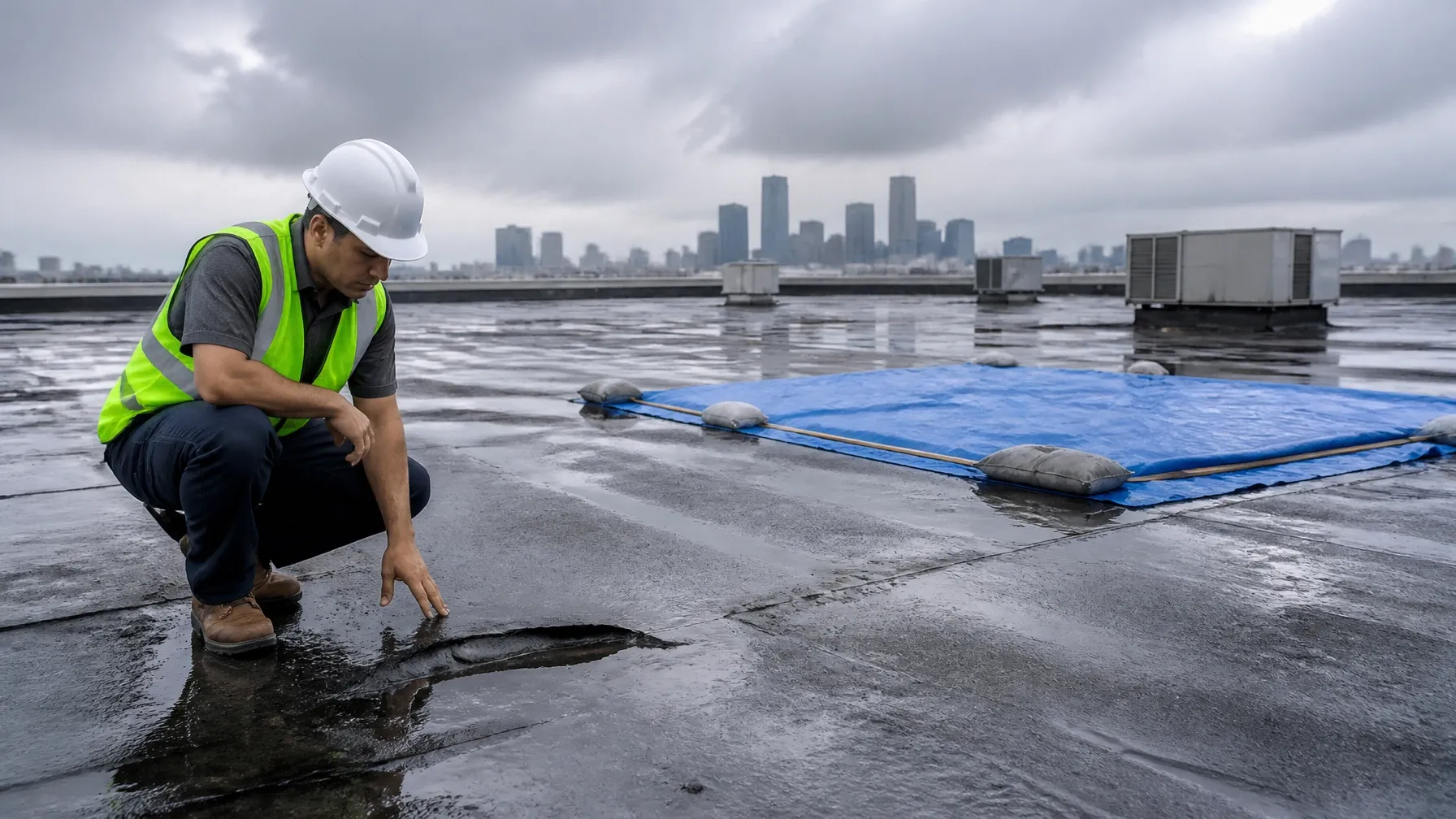
When water drips into a self storage unit, panic sets in immediately. For commercial property owners and facility managers in the Greater Houston area, an active roof leak is not just a maintenance nuisance. It is an immediate liability. Tenant property is at risk, revenue is threatened, and water damage spreads faster than most people realize.
When you manage thousands of square feet of flat or low-slope roof across a sprawling self storage facility, seconds count. Anthony and the team at Primetime Roof Coatings and Restoration have seen firsthand how chaotic the first twenty four hours can be when a storm hits or a seam fails. Someone searching for emergency commercial roof leak repair in Houston is much closer to becoming a customer than someone casually browsing educational articles about why roofs fail. You need answers, immediate action, and a clear protocol to stop the water and protect your investment.
This guide outlines exactly what facility owners must do in the first twenty four hours, why commercial roof leaks deceive even experienced operators, and how to transition from a temporary emergency patch into a permanent, cost efficient roofing solution.
1. What to Do Immediately When Water Enters a Storage Facility
When active water intrusion begins inside a self storage facility, you cannot wait for business hours. Every minute of delay compounds property loss, tenant disputes, and structural degradation. Execute these steps immediately:
- Protect Tenant Property: If water is actively dripping into rented units or common hallways, move fast. Place heavy duty plastic sheeting or tarps over exposed items if safe to do so. Alert affected tenants immediately.
- Document Everything: Before moving items or cleaning up puddles, take clear photos and videos of the active leak, ceiling stains, flowing water, and damaged goods. This documentation is critical for your insurance carrier and protects you against disputed tenant liability claims.
- Identify Affected Areas: Map out every single location where water is entering the building. Note whether the leak is isolated to one corridor or appearing across multiple storage blocks.
- Address Active Water Intrusion: Place large commercial containers, trash cans, or water extraction units under active drips. Keep personnel and tenants away from slippery floors by setting up wet floor signs and caution tape.
- Notify Appropriate Personnel and Insurance: Contact your facility supervisor, maintenance lead, and insurance claims department right away. If electrical panels, lighting fixtures, or security systems are threatened by water, shut off power to those specific circuits immediately.
2. Why Commercial Roof Leaks Can Be Misleading

One of the most dangerous misconceptions in commercial roofing is that the ceiling drip sits directly beneath the roof damage. On flat and low-slope self storage roofs, water rarely travels straight down.
Water is remarkably resourceful. Once moisture breaches a compromised membrane, it hits the rigid insulation or roof deck and follows the path of least resistance. It can travel horizontally for twenty, thirty, or even fifty feet along metal deck flutes or vapor barriers before finally finding a fastener penetration, light fixture opening, or HVAC curb seam to drop through.
- The Visible Drip is a Distraction: Fixing the ceiling drywall where the water pools does nothing to stop the leak. The actual roof entry point may be yards away.
- Multiple Leaks After Heavy Rain: A severe storm often exposes multiple hidden vulnerabilities simultaneously. What looks like a single roof failure is frequently an aging membrane system failing across several stressed seams.
Understanding this dynamic prevents you from wasting money on repetitive interior cosmetic repairs that ignore the true exterior root cause. For more insights on managing structural investments, review our guide on commercial roof repair budgets in Houston.
3. Common Emergency Leak Sources on Commercial Storage Roofs
Self storage facilities typically feature large, expansive flat or low-slope roofs constructed from metal, TPO, PVC, or modified bitumen. Because of their sheer size and numerous penetrations, certain areas fail with predictable regularity during severe weather events:
- Failed Seams and Laps: Thermal expansion and contraction stress welded or glued membrane seams until they peel apart.
- Flashing Failures: Wall flashings, perimeter copings, and parapet walls shift and pull away, allowing driving rain to bypass waterproofing layers.
- Roof Penetrations: HVAC curbs, exhaust fans, plumbing vents, and electrical conduits create hundreds of potential leak vectors.
- Clogged Drains and Scuppers: When debris blocks roof drains, standing water accumulates and exerts hydrostatic pressure against minor membrane imperfections.
- Ponding Water: Standing water lingering for more than forty eight hours weakens membranes and accelerates chemical degradation.
- Previous Patch Repairs: Shoddy mastic patches or mismatched caulking applied during past emergencies almost always fail under intense solar heat and heavy rainfall.
- Storm Damage: High winds lift loose metal panels or tear single-ply membranes right off the deck.
4. Emergency Repair Versus Permanent Restoration
This is where Primetime's operational philosophy becomes critical for facility owners.
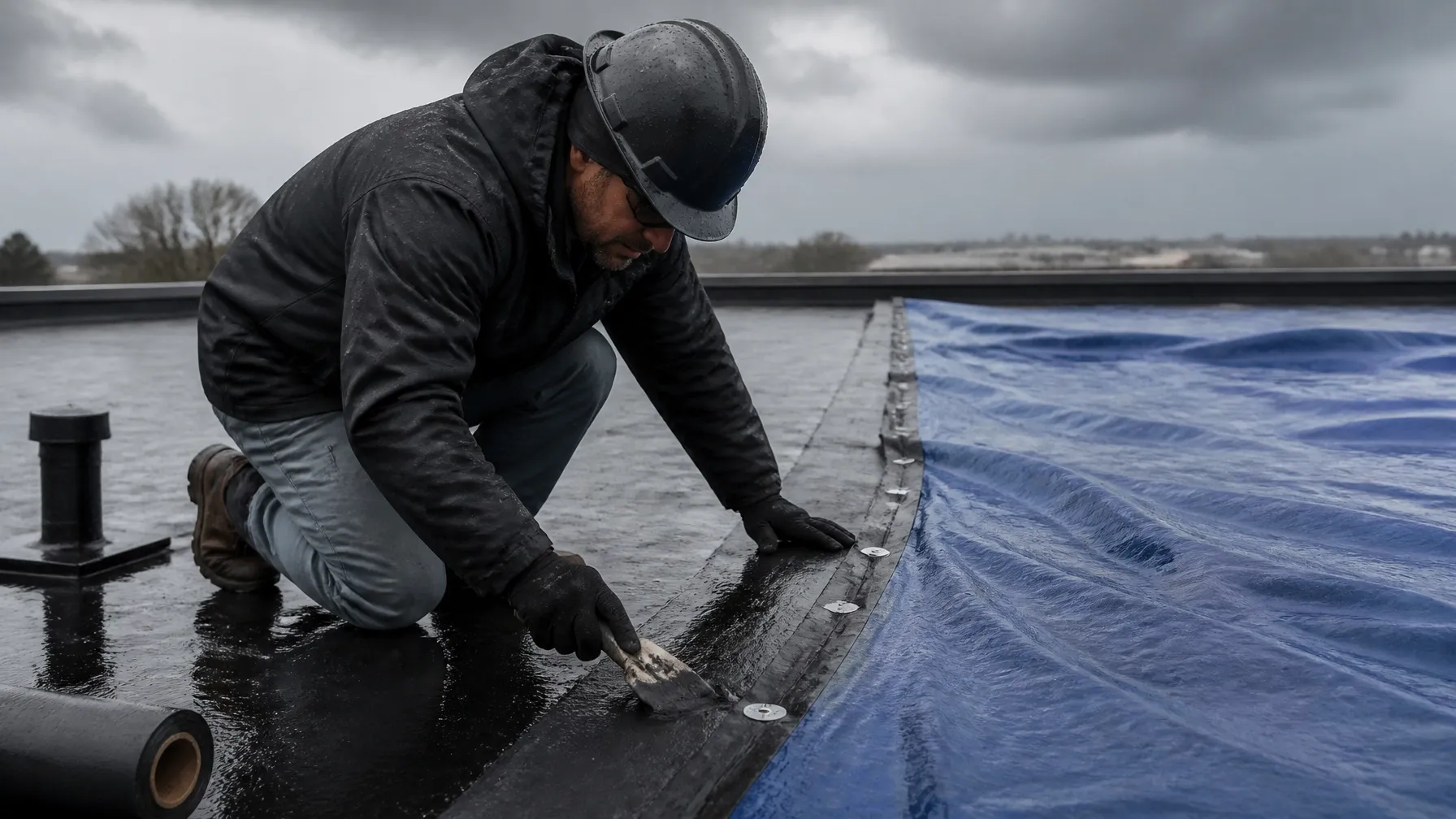
Emergency repair is purely triage. Its sole purpose is stopping active water intrusion, stabilizing the building envelope, and protecting tenant inventory from further destruction. An emergency response crew will deploy temporary dry-in measures, seal critical gaps with specialized wet-surface sealants, or install heavy-duty temporary tarps.
However, an emergency patch does not mean the underlying roof problem has been permanently solved. Treating a chronic roofing failure with endless band-aids is a financial drain.
Once the immediate storm emergency has passed and the interior is stabilized, the entire roof system must be professionally evaluated. You need to determine whether targeted repairs, a seamless silicone roof restoration system, or a full replacement makes the most long-term financial sense. Explore our detailed breakdown on silicone roof restoration versus replacement in Houston to see how coatings eliminate recurring leak cycles.
5. When a Leak Means Repair and When It Means Evaluating the Entire Roof
Not every leak demands a total roof overhaul. Knowing the difference saves commercial property owners tens of thousands of dollars.
- When it is an isolated repair: If your self storage facility roof is relatively young, well-maintained, and suffers from a single localized puncture caused by a fallen branch or a recent HVAC technician service error, a professional repair resolves the issue cleanly.
- When it means evaluating the entire roof: If your facility is experiencing multiple leaks across different buildings, if the membrane is chalking, cracking, and brittle from UV exposure, or if over twenty five percent of the roof surface shows fatigue, patching is throwing good money after bad.
We believe in radical honesty. As Anthony often emphasizes, we would rather walk away from a patch-only job than take your money for a temporary fix bound to fail next month. Read more about our standards in our article explaining why we walk away from patch-only roof jobs.
6. Houston-Specific Considerations for Self Storage Roofs
Operating a commercial property in the Greater Houston area presents unique environmental stressors that test roofing systems to their absolute limits:
- Heavy Summer Rainfall: Torrential downpours and tropical depressions dump inches of water in hours, overwhelming substandard drainage systems and testing every roof seam.
- Extreme Heat and UV Exposure: Relentless Texas sun bakes single-ply membranes and asphalt systems, causing thermal shock and rapid material embrittlement.
- Thermal Movement: Rapid temperature swings between scorching afternoons and cooler nights cause metal buildings and roof decks to expand and contract aggressively, tearing fasteners and opening gaps.
- Storms and Hurricanes: High wind events uplift perimeter metal and stress rooftop equipment curbs.
- Roof Drainage Challenges: Because many large self storage facilities feature sprawling low-slope designs, proper drainage slope is vital to prevent standing water during prolonged Houston flood events.
7. What Self Storage Owners Should Ask Their Roofing Contractor
When an emergency leak strikes and a contractor arrives on site, do not let them rush you into signing a vague contract. Build trust and protect your capital by asking these seven essential questions:
- What caused the leak?
- Was the actual entry point identified, or are we just treating a symptom?
- Is this an isolated problem, or are similar failures developing nearby?
- Are there other areas across the facility showing accelerated deterioration?
- Is another patch likely to be temporary, or will it hold long-term?
- Is the existing roof structure a viable candidate for a seamless fluid-applied restoration coating?
- What should I realistically budget for roof maintenance and capital planning over the next one to three years?
Getting direct, transparent answers to these questions ensures you remain in control of your facility's operational budget.
Need Emergency Commercial Roof Leak Repair in Houston?
When water threatens your self storage units and your tenants, you cannot afford guesswork. Primetime Roof Coatings and Restoration helps commercial property owners in the Greater Houston area stabilize active leaks immediately and evaluate the underlying condition of their roofing system with clinical precision.
Get expert answers without the sales pressure. Call Primetime Roof Coatings and Restoration today at 832-447-1170.