Roof Coating vs. Roof Replacement for Self-Storage Facilities in Houston, TX: Which Is the Better Investment?
Self-storage facilities in Houston face intense summer heat, UV exposure, heavy rainfall, and hurricane season. Those conditions can shorten the life of commercial roofs, leading many owners in Southeast Texas and Greater Houston to wonder whether a roof coating or a complete roof replacement is the better investment for their self-storage facilities.
When your commercial roof begins to show wear, the default reaction is often a full tear-off and replacement. But for large-footprint self-storage assets, replacement drains capital reserves and causes logistical headaches for tenants. At Primetime Roof Coatings & Restoration, drawing on Anthony's decades of hands-on expertise in spray polyurethane foam and advanced coating systems, we evaluate roofs through a diagnostic, engineering-first lens. Before you commit six figures to a tear-off, you need a clear breakdown of when a high-performance coating outperforms replacement, how local climate factors into your decision, and what financial logic dictates for your property.
What Is a Commercial Roof Coating?
A commercial roof coating is a fluid-applied, seamless membrane installed directly over your existing roof deck and substrate. Unlike traditional single-ply membranes or asphalt systems that rely on mechanically fastened sheets or hot asphalt kettles, a liquid coating cures into a monolithic, elastomeric barrier.
High-performance coatings typically fall into three categories: acrylics, polyurethanes, and high-solid silicones. In our region, silicone systems are particularly favored because they withstand ponding water and relentless UV bombardment without breaking down.
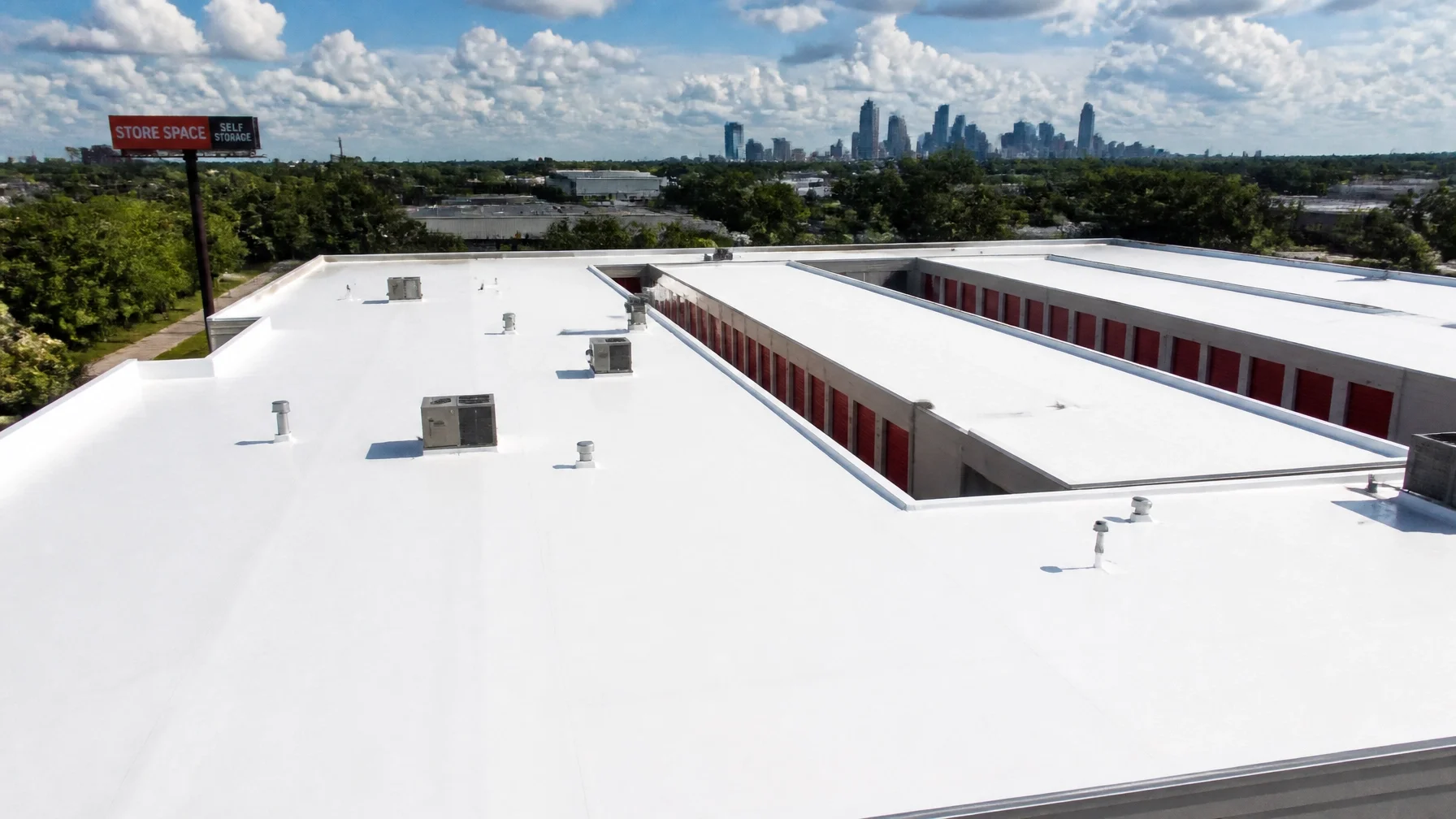
When applied to a structurally sound roof, a coating creates a waterproof seal over seams, flashings, and fastener heads. It stops active leaks and shields the underlying assembly from thermal shock. More importantly, it extends the service life of your existing roof by a decade or more while providing up to a 50 percent savings compared to a disruptive tear-off.
When Can a Self-Storage Roof Be Restored?
Restoration via roof coating is not a universal fix, but when applied to the right roof, it delivers exceptional return on investment. A self-storage facility roof is an ideal candidate for coating when specific structural and material criteria are met:
The underlying roof deck and framing remain structurally sound, with no sagging or structural compromise.
Core samples and infrared moisture scans confirm that insulation is dry and free of trapped water.
Leaks are localized around flashings, penetrations, seams, or fastener heads rather than stemming from widespread deck failure.
The existing membrane is weathered, chalking, or aging, but its physical foundation is intact.
You require minimal operational disruption so your tenants experience zero downtime or access blockages.
When these conditions align, coating the roof stops deterioration in its tracks. You avoid the heavy dumpsters, loud machinery, and debris associated with full tear-offs. Furthermore, a restored roof qualifies for 10, 15, or 20-year transferable warranties that cover both labor and materials.
When Is Roof Replacement the Better Option?
Pragmatism requires us to state clearly when a coating is the wrong choice. If a roof has passed the threshold of restoration, applying a coating is a waste of capital. Full roof replacement becomes the necessary path under specific circumstances:
Core samples reveal widespread moisture saturation throughout the insulation layers. When insulation holds water, a topcoat traps that moisture, accelerating deck corrosion from the inside out.
The structural deck, whether metal or wood, suffers from severe rust, rot, or structural compromise.
Leaks are systemic, migrating across the entire building footprint because the membrane has lost its structural integrity.
You have experienced repeated, failed patch repairs over many years, resulting in a patchwork assembly that no longer bonds reliably.
When structural decay is present, safety and asset protection demand a complete tear-off and a fresh assembly.
Roof Coating vs Roof Replacement Cost in Houston
Evaluating the financial logic of commercial roofing requires looking beyond initial contractor bids to examine long-term cash flow, asset valuation, and operational disruption.
While exact costs vary based on square footage, roof pitch, and material selection, commercial roof replacement requires extensive labor, heavy equipment rental, waste hauling fees, and disposal costs. Tearing off a large self-storage footprint and installing new insulation and membrane demands significant capital outlay and can disrupt tenant traffic.
Roof coating eliminates the tear-off and disposal phase. Because the existing roof stays in place as a stable base, labor hours drop significantly, and material is applied efficiently via spray or roller equipment. This translates to upfront cost efficiency of up to 50 percent compared to replacement.
Beyond initial savings, reflective coatings lower rooftop surface temperatures by up to 80 degrees Fahrenheit. This reduction in thermal transfer translates into tangible energy savings of 10 to 15 percent annually, reducing cooling loads on climate-controlled storage units and delivering continuous ROI year after year.
How Houston's Climate Affects Commercial Roofs
Houston's climate is notoriously harsh on commercial buildings. Self-storage facilities, with their expansive low-slope and metal roof footprints, bear the brunt of environmental stressors:
Intense Heat: Ambient summer temperatures push rooftop surface temperatures past 160 degrees Fahrenheit, accelerating the degradation of traditional roofing materials.
UV Exposure: Unrelenting ultraviolet radiation breaks down polymer chains in roofing membranes, causing embrittlement, cracking, and chalking.
Hurricanes and Heavy Rain: Tropical storms deliver torrential downpours and high wind uplift forces that test perimeter flashings, seams, and drainage systems.
High Humidity: Persistent moisture in the air fosters biological growth and stresses vulnerable lap joints.
Thermal Expansion: Rapid daily temperature swings cause building materials to expand and contract continuously, shearing fasteners and opening gaps at roof seams.
Standard roofing materials struggle under this cyclic punishment. High-grade elastomeric and silicone coatings create a seamless, flexible membrane engineered to move with thermal expansion while resisting UV breakdown and ponding water during heavy rain events.
Questions Every Self-Storage Owner Should Ask
Before making a final capital expenditure decision for your self-storage facility, ask your roofing contractor these critical diagnostic questions:
What do core samples and infrared scans reveal about our insulation and deck condition?
Are our leaks localized at penetrations and seams, or are they systemic across the entire building?
What is the specific mil thickness and chemical formulation of the proposed coating system?
Does the warranty cover ponding water, and is it backed directly by the manufacturer?
How will the restoration process impact tenant access, gate security, and daily facility operations?
Asking these questions separates professional asset managers from contractors looking for a quick sale.
Secure Your Self-Storage Investment Today
Choosing between roof coating and roof replacement does not have to be a gamble. At Primetime Roof Coatings & Restoration, we provide honest, diagnostic-first assessments that prioritize your operating budget and long-term asset value.
If you manage a self-storage facility in Houston, Greater Houston, or Southeast Texas, contact us today for a professional roof inspection. We will give you straightforward answers, clear data, and zero high-pressure sales tactics. Call us at 832-447-1170 to schedule your comprehensive roof evaluation.